Founded in 1903, the Worker’s Educational Association (WEA) was established with the aim of
increasing the accessibility to education, particularly for working people who had been
previously denied or excluded from a university level education. At its core, the WEA believes
that learning should be exercised as a right, as opposed to a privilege. The organisation played
an extremely important role in widening the access to education across not just Britain, but on
a global scale.
The University of Reading has long since shared this belief of equal opportunities in education,
and this very commitment characterises the early years of the university. With collaborations
with charities such as the WEA, the university itself was able to provide learning with its
local community. As Reading celebrates its centenary, this section aims to focus on the
historical connection between the University of Reading and the WEA, and how important a role it
played in contributing to the history of working-class education at the university.
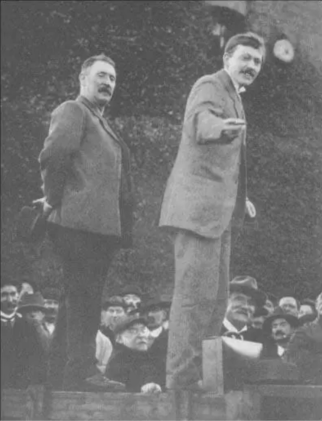
Albert Mansbridge (right), the founder of WEA, making a speech in 1913
‘Workers’ Educational Association: 1903-1927’
This photograph shows Albert Mansbridge, the founder of the WEA, giving a speech in 1913. Mansbridge was a driving force behind the idea that education should be available to all, not just the privileged. His work in the early years of the WEA laid the foundations for the organisation’s mission to bring university-level learning to working people, both in Britain and around the world.
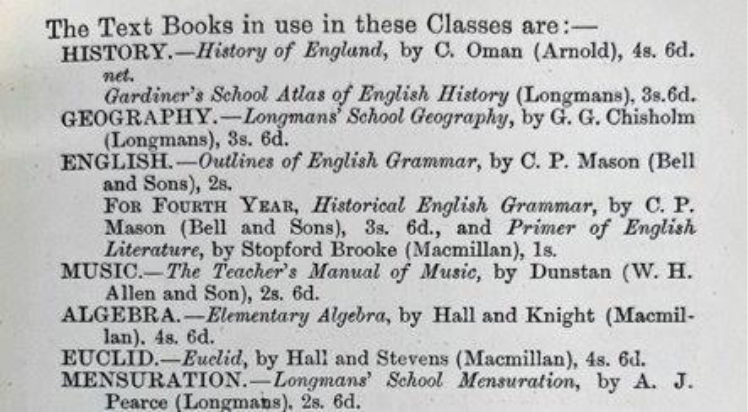
Textbooks in use for pupil teachers during Eveline Dowsett’s year as a tutor (from the University
Extension College Calendar, 1897-8)
Brian Richards, ‘Courses for Pupil Teachers (1897-98)', Tales From The Archives [blog] (27 March
2025)
Campbell, Dennis,‘‘Students stage rally against top-up fees’,
https://blogs.reading.ac.uk/tales-from-the-archives/2025/03/27/courses-for-pupil-teachers-1897-98/
(last accessed 12 January 2026)
Books such as this demonstrate how the University was able to collaborate with the Workers’ Educational Association in order to provide evening and tutorial classes for those whose working days were very busy. Many of these students' occupations were labour-focused work, such as carpentry and gardening. This partnership between these two organisations meant these local people, who had not had the chance to attend university, could still gain a proper education.
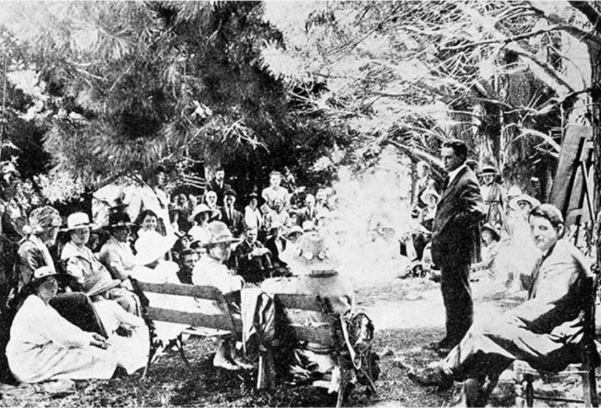
Canterbury WEA summer school class, 1921
Kerryn Pollock, Canterbury WEA summer school class, 1921, Te Ara – the Encyclopedia of New Zealand
https://teara.govt.nz/en/photograph/46604/canterbury-wea-summer-school-class-1921
(accessed 13 January 2026)
This photograph of a Workers’ Educational Association (WEA) summer school in
Canterbury, New Zealand, emphasises the true extent of the adult education movement, on an international
scale. While it is true that the WEA played an extremely important role in regard to British education,
its dedication to widening access to education extended far beyond the UK, reflecting a global
commitment to working-class learning and self-improvement.
This is especially important to consider when examining the University of Reading’s own relationship
with adult and extension education, due to Reading’s own dedication to widening educational access, as
noted in its close relationship with the WEA. The two establishments share many of the same values
regarding equal education opportunities. Therefore, the photograph not only emphasises the true scale of
the spread of the WEA, but also shows that Reading was part of a wider international movement to make
education more accessible and fair.